
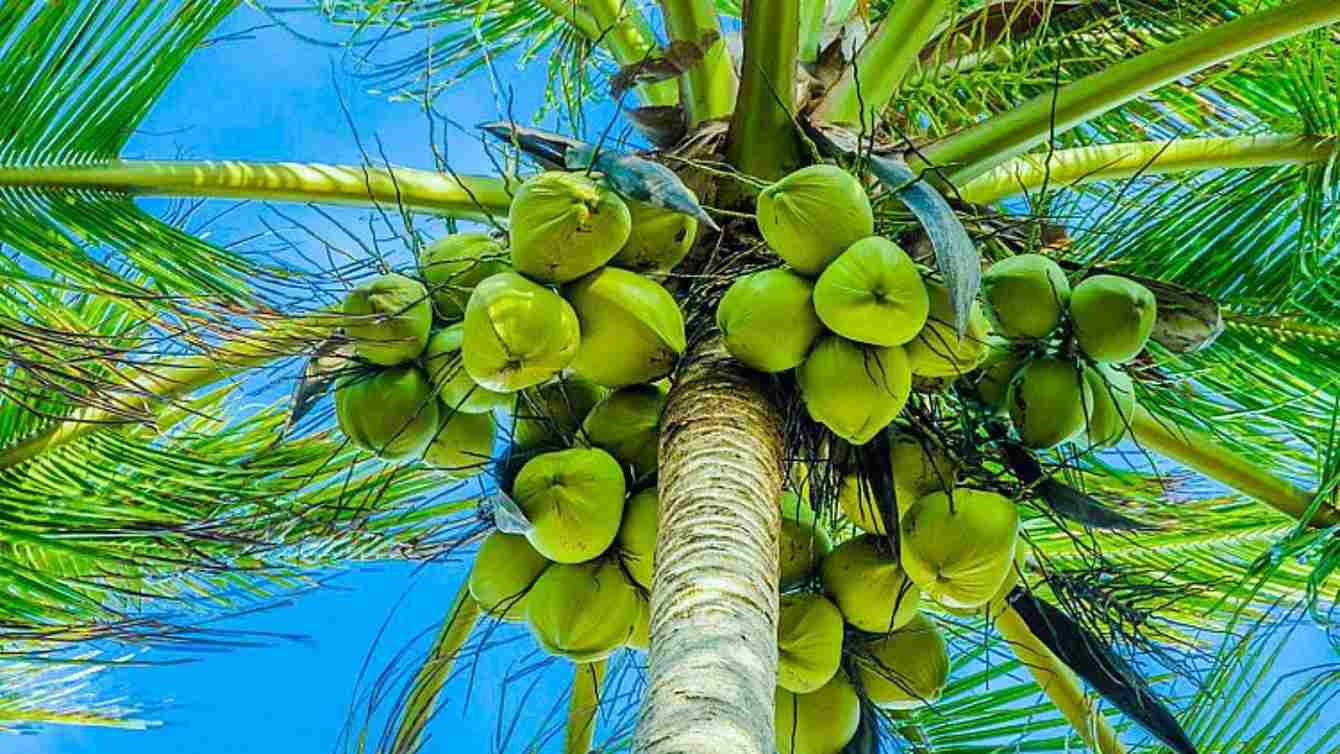

To maximize your coconut tree’s yield and get large, water-filled nuts, you must focus on deep root fertilization and precise water management during the dry summer months. Because coconut palms require massive amounts of nutrition to support year-round harvesting, applying a balance of organic manure, common salt, and micro-nutrients twice a year is the single most effective way to multiply your yield. With the right agronomic practices, even a small coconut grove can produce a bountiful harvest season after season.
Coconut trees are heavy feeders, so applying the double-dose fertilizer routine is essential. To sustain production, apply fertilizers in two split doses: pre-monsoon in May to June and post-monsoon in September to October. For a mature bearing tree over eight years old, apply 30 to 50 kilograms of well-rotted cow dung, compost, or green manure per year, divided into the two doses. Along with the organic base, apply one kilogram of Urea, 1.5 kilograms of Mussoriephos, and two kilograms of Muriate of Potash. Potassium is the most critical nutrient for coconuts. It increases nut size, enhances husk thickness, and makes the tree drought-resistant. Applying common salt is a traditional, scientifically backed method to boost yields, especially if your trees are planted inland away from coastal sea breeze. Apply one to 1.5 kilograms of common salt per tree annually along with your organic manure. Sodium accelerates the uptake of potassium, improves coconut water retention, increases the thickness of the kernel, and prevents premature button shedding.
Never dump fertilizers directly against the trunk of the tree, as the active feeding roots are located further away. Dig a circular trench or basin 1.5 to two meters away from the trunk, with a width of one foot and a depth of six inches. Scatter your manure, salt, and fertilizers evenly within this basin, cover it back up with topsoil, and water thoroughly. Water stress is the primary reason why young coconuts drop off before maturing. A mature tree needs roughly 40 to 50 liters of water per day during the hot, dry summer months from December to May. If using a drip system, place four drippers around the tree basin at a distance of one meter from the trunk to ensure the entire root zone stays damp.
Fungal infections and boring insects drastically reduce coconut yields in tropical climates. To stop borers like the rhinoceros beetle, fill the youngest leaf axils at the very top of the crown with a mix of 250 grams of neem cake mixed with equal parts sand twice a year. This prevents the destructive beetle from boring into the tender growth bud. If your tree drops tiny buttons early or produces deformed, cracked nuts, it suffers from a lack of boron. Apply 100 grams of Borax per tree in the basin annually to stabilize fruit hold. By following these comprehensive tips on fertilization, salt application, basin feeding, irrigation, and pest control, you can significantly boost your coconut harvest and enjoy larger, water-filled nuts throughout the year. Consistent care and attention to the tree’s nutritional needs are the keys to a thriving and productive coconut palm.
