
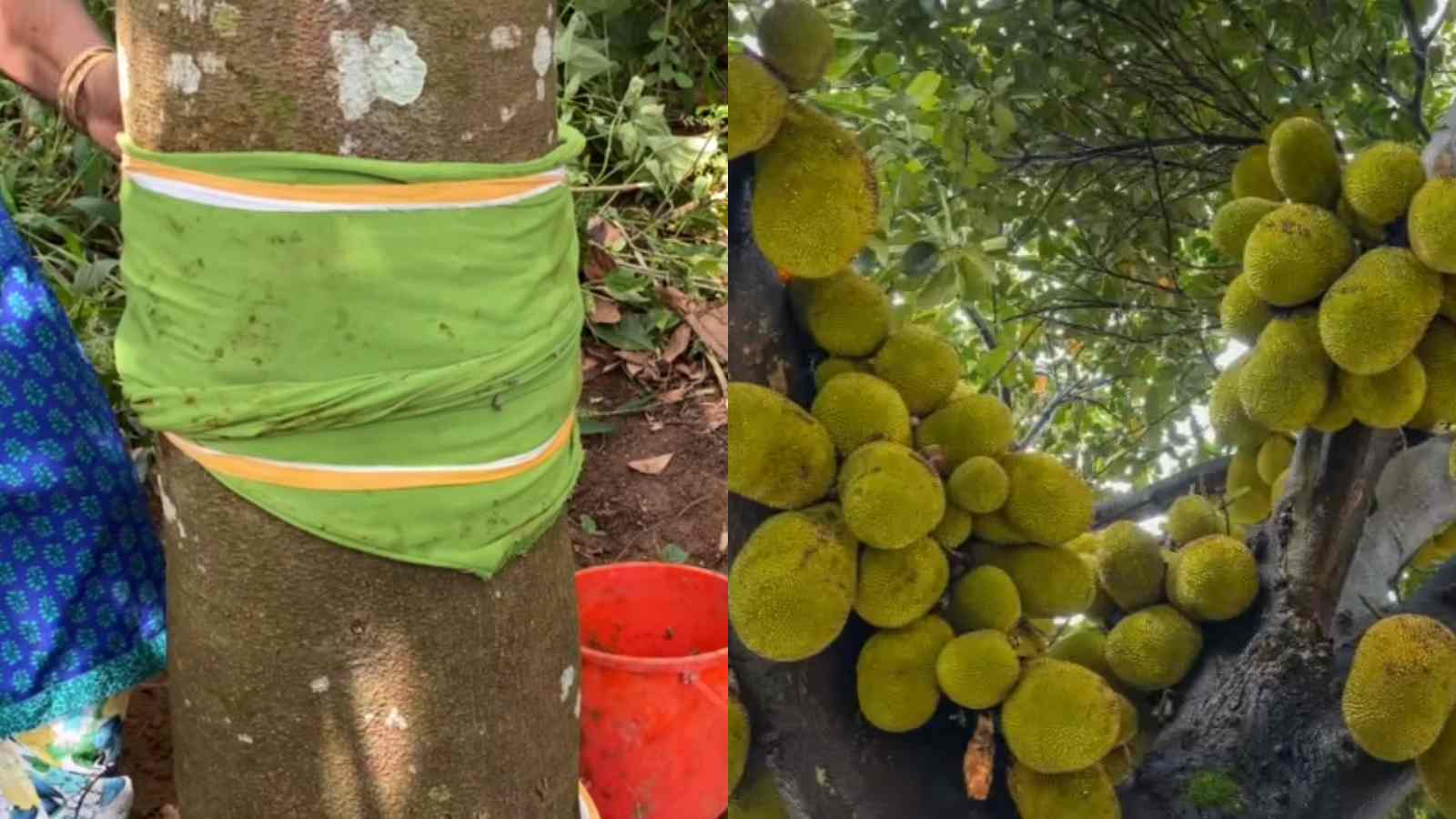

To get a massive yield of sweet, firm jackfruits in Kerala’s unique tropical climate, you need to align your care with the state’s heavy monsoon cycles. Because jackfruit trees face high humidity, managing root drainage during the Edavappathy monsoons and applying heavy organic feeds during the Chingam-Kanni months are the secrets to success. With the right techniques and timely care, your jackfruit tree can produce an abundant harvest of delicious, sweet fruit that will be the envy of your neighbourhood.
The first and most critical step is mastering monsoon drainage to prevent root rot. While jackfruit thrives in Kerala’s heat, stagnant water during the heavy June to September monsoons will cause root rot and fungal disease. Always plant saplings on a raised mound of soil at least one to two feet high. This ensures that heavy rainwater runs off away from the root collar. Additionally, dig shallow drainage channels around the base drip-line of the tree before May to prevent water pooling. Timing your fertilization with the Malayalam calendar is equally important. To get a heavy fruit set by summer, your fertilizing schedule must match the tree’s growth cycles. During the post-monsoon period in August and September, apply a heavy dose of organic manure. Mix 15 to 20 kilograms of well-rotted cow dung or compost with two kilograms of neem cake and one kilogram of bone meal per mature tree. Neem cake is crucial in Kerala to protect roots from subterranean pests. In October and November, apply wood ash heavily around the base drip-line. Wood ash is rich in potassium, which triggers robust flowering and makes the final jackfruit much sweeter.
Protecting your tree from the stem borer is essential, as it is the single biggest threat to jackfruit trees in Kerala, chewing tunnels through the trunk and killing branches. Paint the bottom three to four feet of the tree trunk with a thick mix of lime and copper oxychloride before the monsoons start. This acts as a physical barrier against egg-laying beetles. Keep the base completely clear of fallen leaves and decaying organic matter during rainy months, as this is where pests harbour. Additionally, fruit flies and fungal diseases thrive in Kerala’s high humidity and will rot your young jackfruits before they mature. Once the small green jackfruit is about the size of a mango, wrap it completely. Use breathable gunny bags, fine mesh mosquito nets, or traditional perforated newspaper layers. Never use solid plastic bags, as they trap moisture and cook the fruit in the sun. This wrapping stops fruit flies from laying eggs and shields the fruit from fungal spores carried by rain.
Finally, pruning the hidden branches can significantly boost your harvest. Jackfruit bears its heaviest fruit directly on the main trunk and primary thick branches, not on thin outer twigs. Prune away thin, weak, and criss-crossing branches inside the canopy. Opening up the centre of the tree allows sunlight to bake the main trunk, which stimulates the dormant buds on the bark to burst into fruit-bearing flowers. By following these comprehensive tips on drainage, fertilization, pest control, and pruning, you can grow a healthy, productive jackfruit tree that rewards you with a massive harvest of sweet, firm fruit season after season. With a little patience and consistent care, your jackfruit tree will become a valuable and delicious asset to your home garden.
