
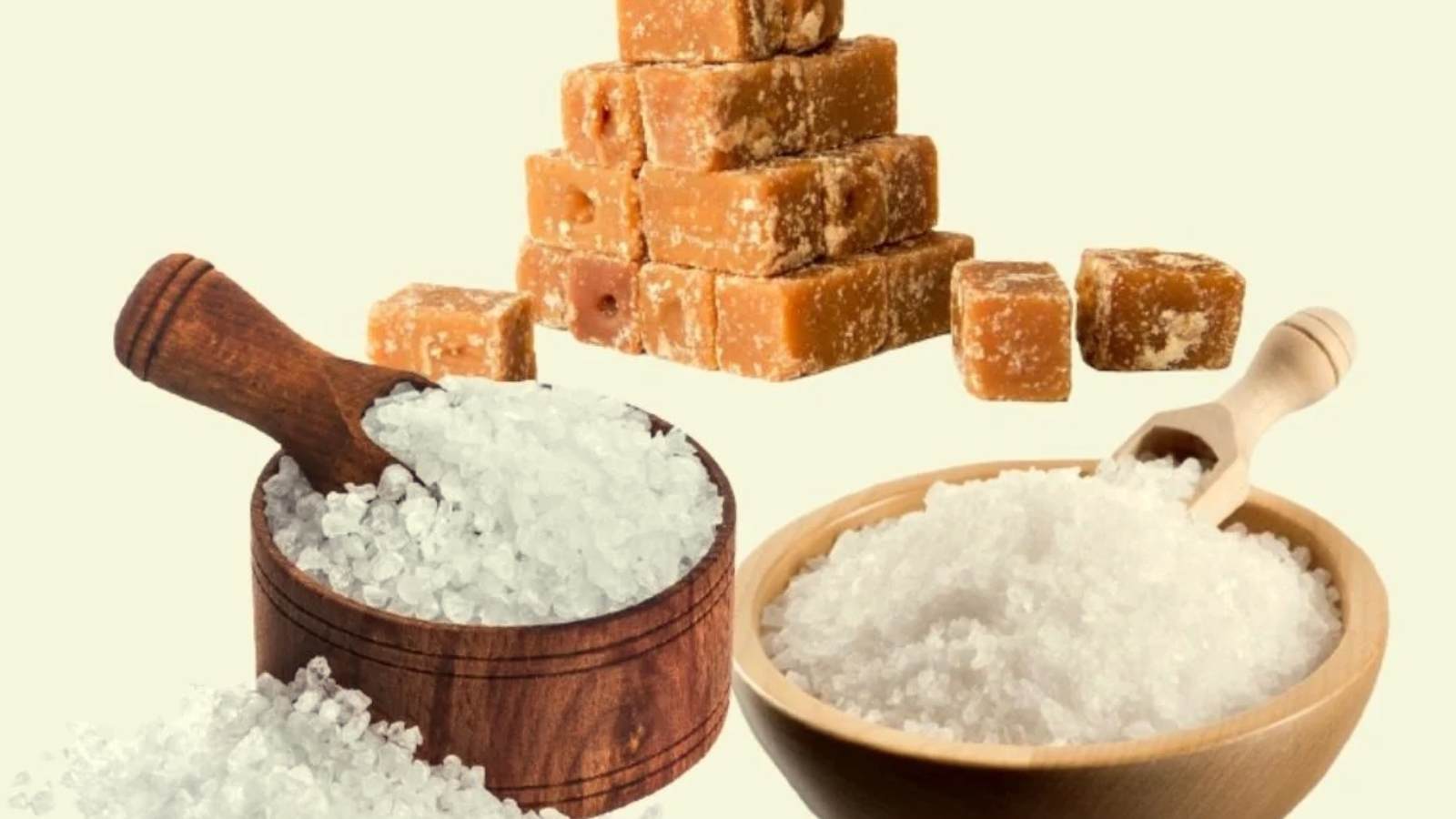

Using salt is an ancient, highly effective trick to protect dry pantry staples from pests, humidity, and spoilage. When you add salt to these foods, it acts as a natural dehydrator and deterrent. It absorbs ambient moisture, which bugs and mould need to survive, and creates a hostile environment for insects like weevils and beetles. This simple kitchen ingredient can extend the shelf life of your staples and save you money by preventing spoilage. വീഡിയോ കാണാം
Jaggery easily attracts ants and turns watery or sticky due to moisture. To protect it, do not mix salt directly into the jaggery. Instead, place a few small pieces of rock salt wrapped in a small piece of clean cotton cloth at the bottom of the container before adding the jaggery. This absorbs humidity without making your sweet jaggery salty. Rava is highly prone to tiny web-spinning worms and weevils. Mix half a teaspoon of fine table salt into every one kilogram of rava, then dry-roast the rava in a pan for three to four minutes on low heat before storing it. The combination of salt and roasting keeps it insect-free for months. Flours like rice flour and maida easily spoil due to dampness and tiny flour beetles. Mix one teaspoon of salt thoroughly into one kilogram of flour. Because salt keeps the flour completely dry, bugs will not lay eggs in it. Always label your containers with a note that says salt has been added, and when you eventually cook with these flours, remember to reduce or skip the salt in your recipe so your food doesn’t turn out too salty.
Lentils absorb atmospheric moisture quickly during the rainy season, causing them to develop fungus or attract small brown pulse beetles. Mix half a teaspoon of regular fine table salt into every kilogram of raw, dry pulses before sealing them in an airtight jar, or drop three to four large crystals of whole rock salt straight into the container. The salt creates a moisture-free shield that prevents pests from breathing or multiplying. Large sacks of rice are notorious for harbouring tiny black rice weevils. When storing a large container of rice, sprinkle a tablespoon of rock salt at the bottom, middle, and top layers as you fill the container. For ultimate security, combine the salt with four to five dried bay leaves or dried neem leaves. The salt controls the humidity while the herbal aroma repels the bugs naturally.
Whole spices like coriander seeds, cumin, and red chili powder lose their shelf life or get infested with tiny white webs when exposed to air. Mix a pinch of salt directly into your jar of red chili powder or turmeric. For whole spices, place a small lump of rock salt inside the spice box. It preserves the vibrant colour and pungent heat of the spices by halting oxidation caused by trapped humidity. If you grind your own ginger-garlic paste at home, it can turn green, sour, or develop mould within a week in the fridge. While blending your fresh ginger and garlic, add one teaspoon of salt and one tablespoon of cooking oil per cup of paste. Salt acts as a powerful, non-chemical food preserver, keeping the paste fresh and perfectly coloured for up to two months in the refrigerator. With these simple salt-based techniques, you can keep your pantry staples fresh, pest-free, and ready to use whenever you need them.
