
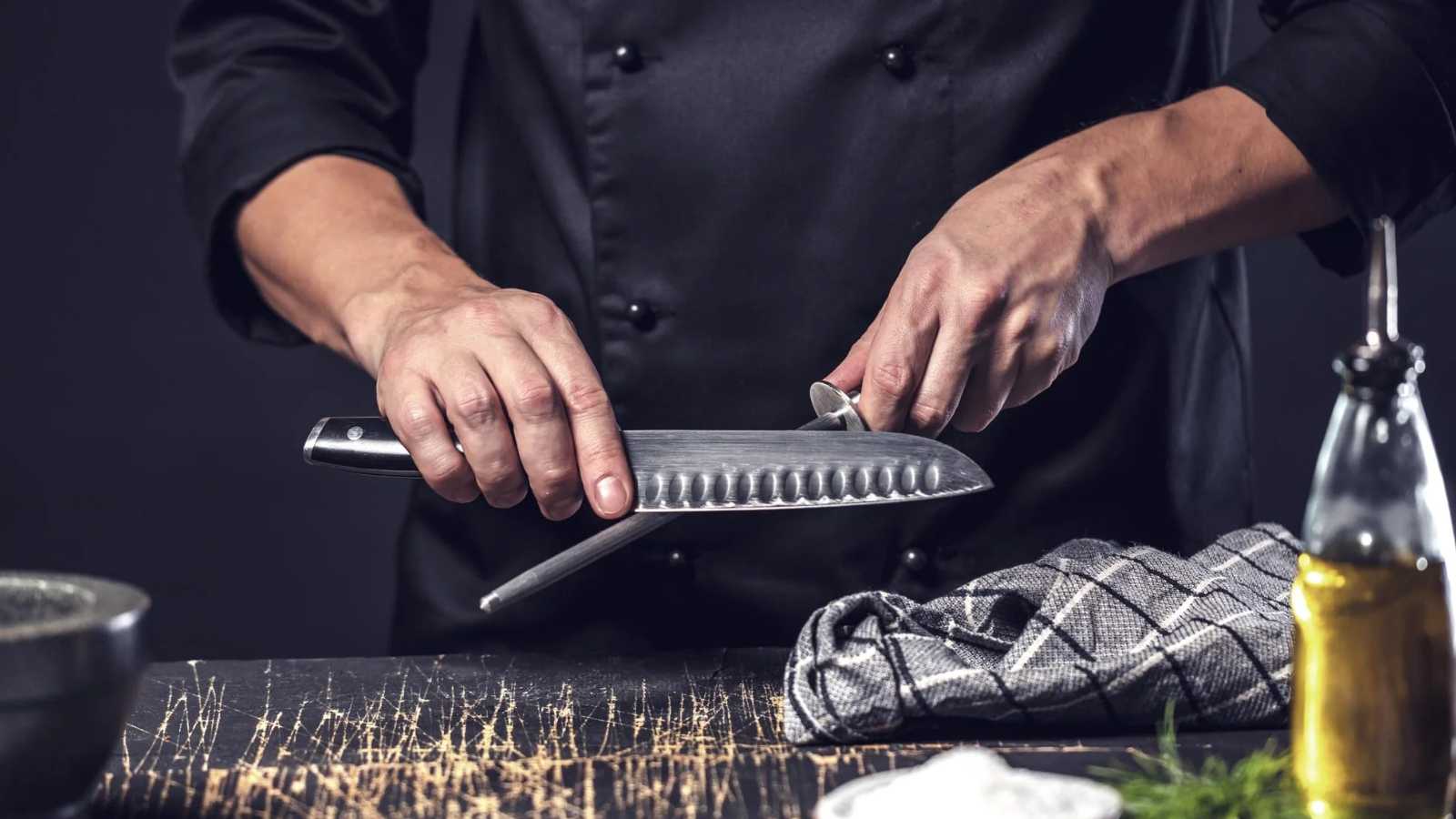

A sharp knife makes cooking safer and easier, but most home cooks put off sharpening because it seems complicated. In reality, using a whetstone at a steady 15 to 20-degree angle is the most effective and professional way to sharpen a knife at home. With a little patience and the right technique, you can restore a dull blade to razor sharpness in minutes, without spending money on professional sharpening services.
Start by soaking the stone in water for 10 to 15 minutes if it is a water stone, or apply honing oil if it is an oil stone. Hold the knife with your dominant hand on the handle and your fingertips lightly pressing the flat of the blade. Set the angle to roughly 15 to 20 degrees against the coarse side of the stone, which is about the height of two stacked coins under the spine of the blade. Push the blade forward and across the stone in a sweeping motion from the heel to the tip. Repeat 10 to 15 strokes on one side until you feel a tiny rough edge, called a burr, form along the opposite side of the blade. Flip the knife and repeat the same number of strokes for the other side. Then switch to the fine grit side of the stone and repeat the process with lighter strokes to polish and refine the edge.
If you do not have a whetstone, you can still sharpen your knife using an unglazed ceramic item. Turn a coffee mug upside down to expose the rough, unglazed ceramic ring on the bottom. Angle the knife at 20 degrees and draw the blade backward across the ceramic rim just like you would on a stone. Alternate sides 5 to 10 times, then wash the blade to remove any ceramic dust. This quick home fix works surprisingly well for light sharpening and is perfect when you need a fast touch-up before cooking.
To get the best results, maintain the exact same angle for every stroke, because changing the angle halfway ruins the edge. Test the sharpness by slicing a piece of paper or a ripe tomato rather than testing with your finger, which can lead to serious cuts. Finally, hone regularly using a steel rod between deep sharpenings to keep the edge aligned and extend the life of your knife. With consistent practice, home sharpening becomes a simple skill that keeps your kitchen tools in top condition.
