
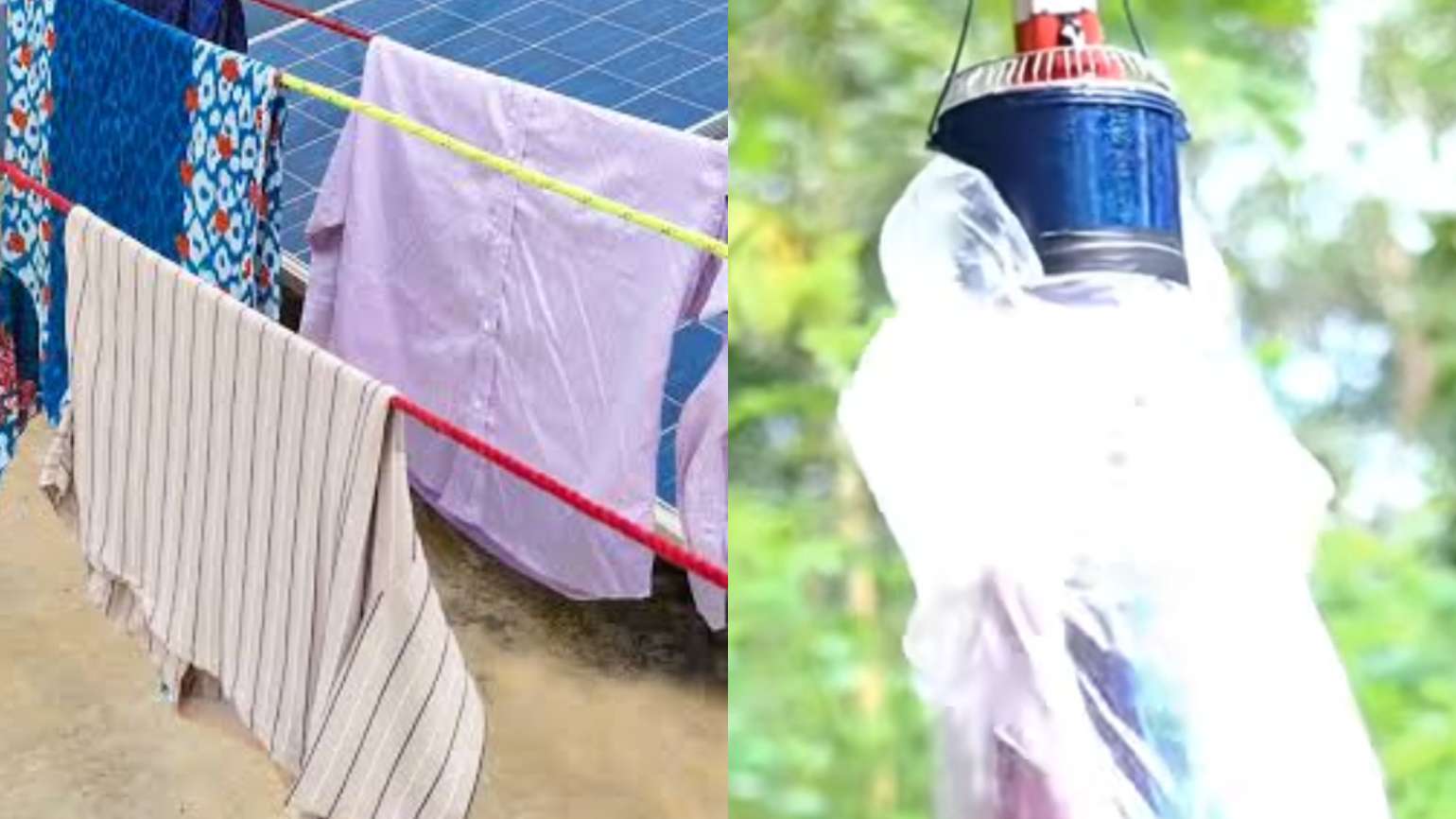

Drying clothes indoors during the rainy season can be a massive challenge, leading to damp smells and cluttered rooms. You don’t need an expensive electric dryer to solve this—you can maximize your indoor drying speed using smart DIY setups and household hacks. With a few clever adjustments and items you already own, you can build an efficient indoor drying space that gets your laundry ready faster, even when the sun refuses to cooperate.
The fastest homemade method is the DIY “Hot Air Tent.” Place a standard folding clothes rack near an open space or close to an electrical outlet, hang your wet clothes on it leaving ample space between each garment, and cover the entire rack with a clean, lightweight bedsheet or a large plastic sheet to form a tent. Place a pedestal fan or a small room heater pointing inside the bottom of the tent, and the trapped moving air will dry your clothes in a fraction of the time—just ensure the sheet doesn’t touch the heater elements directly. For a space-saving alternative, try the pulley-operated ceiling rack. Since warm air naturally rises, the space near your ceiling is the warmest area in your room. Create a makeshift ceiling rack using a lightweight wooden ladder or PVC pipes, attach pulleys to your ceiling hooks, and lift and lower the rack as needed. Hanging clothes high up keeps your living space clear and utilizes the naturally trapped heat near the ceiling. If you need something even simpler, the curtain rod extension is perfect: place extra temporary shower curtain rods or tension rods across empty door frames or wide window alcoves. These rods can be taken down instantly, require no drilling, and place clothes right in the pathway of ambient room airflow.
Beyond setups, a few essential hacks make a huge difference during the rainy season. Before hanging heavy items like jeans or thick cotton shirts, lay them flat on a large, dry bath towel, roll the towel up tightly with the clothing inside like a burrito, and stomp or press down on it—the towel will instantly absorb a massive amount of excess moisture, cutting line-drying time in half. Avoid draping clothes directly over clotheslines or rack bars where the fabric folds over itself; instead, put clothes on plastic hangers and hook them onto your drying rack to maximize the surface area exposed to the air. Always run your washing machine’s spin cycle twice on rainy days, as the second spin removes a surprising amount of trapped water that the first cycle missed without damaging your clothes.
Strategic room placement is the final piece of the puzzle. Avoid setting up your drying rack in a closed, dark room, which causes a stale smell. Place it in your smallest room alongside a dehumidifier or right under a ceiling fan running at maximum speed, and keep a window cracked open slightly—even during rain—to allow the moisture-laden indoor air to escape. By combining the right DIY setup with these airflow and moisture-removal tricks, you can turn even the gloomiest rainy day into an efficient laundry day, keeping your clothes fresh, dry, and ready to wear without ever needing an expensive electric dryer.
