
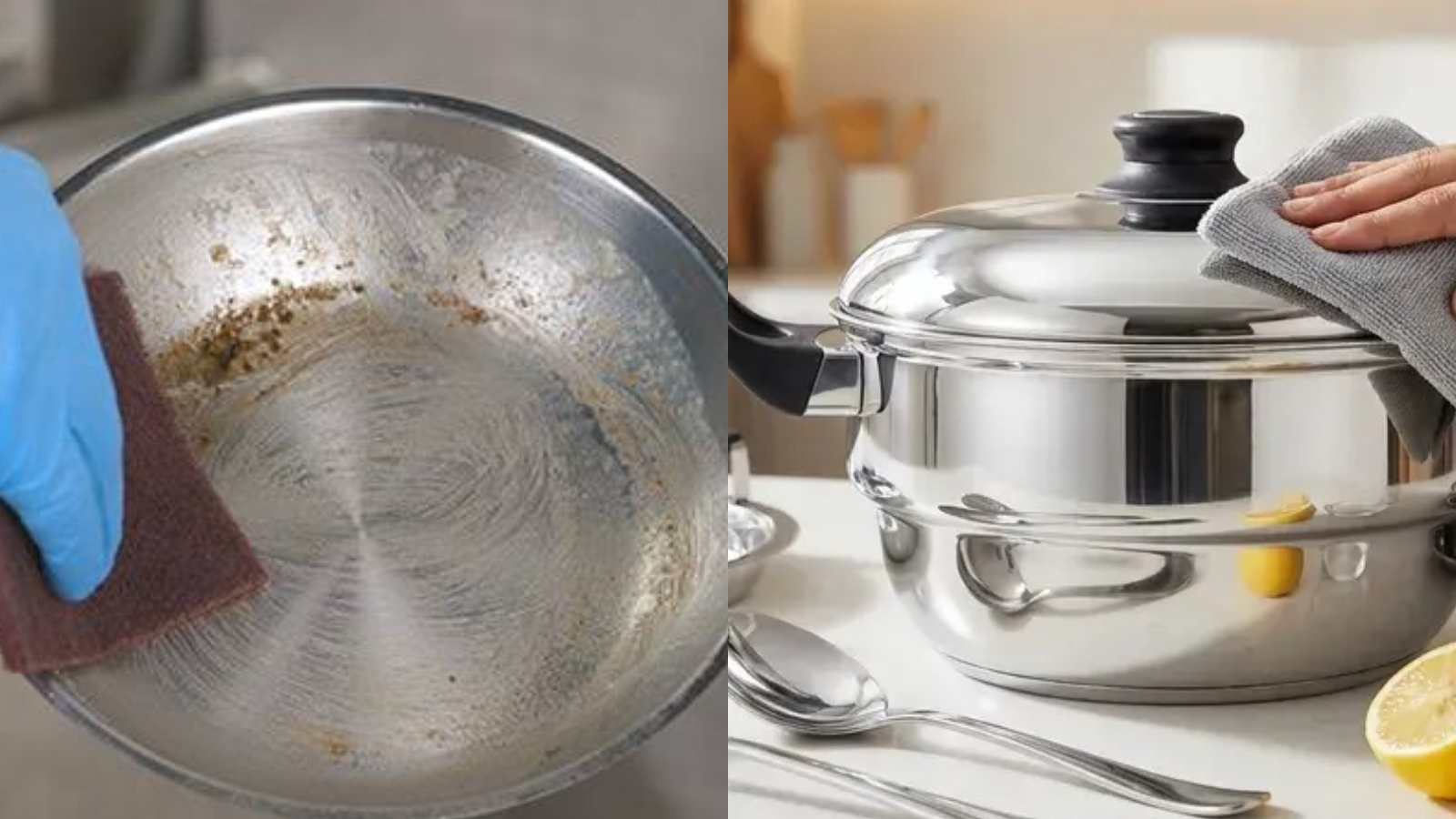

Boiling water with baking soda and vinegar directly inside a larger pot or within the stained vessel itself is the most effortless way to lift heavy, black soot stains from stainless steel without exhausting yourself with endless scrubbing. Soot is carbon buildup from gas stoves, firewood, or burnt food, and it binds tightly to metal surfaces, making it one of the most stubborn stains to remove. Fortunately, there are several effective household methods that can break down soot naturally and restore your cookware to its original shine.
The deep boiling soak is the best method for heavy, encrusted soot. If the soot is on the bottom or outside of the vessel, you will need a pot larger than the stained vessel to submerge it completely. If the soot is on the inside, simply do this directly inside the vessel. Fill the container with enough water to cover the soot, then add three tablespoons of baking soda and half a cup of white vinegar. The mixture will fizz as it reacts. Bring the water to a rolling boil and let it simmer on the stove for 15 to 20 minutes. The intense heat combined with the expanding bubbles will naturally loosen the bonded carbon. After boiling, take the vessel out safely, let it cool slightly, and use a non-scratch scrub pad with regular dish soap. The soot will slide right off like soft mud.
For stubborn, baked-on black patches, a cream of tartar paste is highly effective. Mix two tablespoons of cream of tartar with a few drops of water to form a thick, gritty paste. Smear the paste thickly over the soot-stained areas and let it sit for 30 minutes to chemically eat through the carbon layers. Then take a damp, non-scratch sponge and scrub firmly before rinsing with warm water. For light soot and restoring shine, cut a fresh lemon in half and dip the open side generously into coarse salt. Use the lemon half like a scrubbing brush, pressing firmly against the soot stains. The citric acid cuts the chemical bond of the soot, while the salt acts as a safe, scratch-free abrasive.
One crucial rule for soot removal is to never use steel wool or metal wire scrubs. While it is tempting to scrape soot with wire scrubs, it leaves millions of microscopic scratches on the steel. Future soot and grease will trap inside these scratches, making the vessel permanently harder to clean next time. Always opt for non-scratch scrub pads, soft sponges, or natural abrasives like salt and baking soda. By following these simple methods and avoiding harsh tools, you can keep your stainless steel cookware looking clean and shiny for years to come.
