
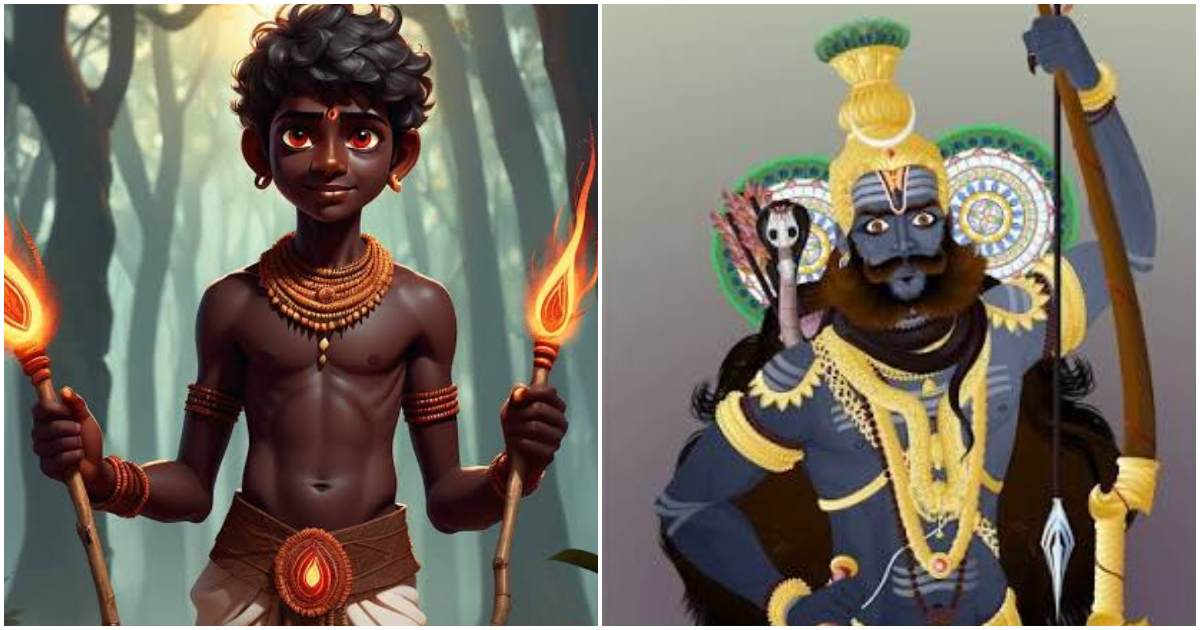

The story of the Chathans, most notably Kuttichathan or Vishnumaya, is one of the most fascinating, complex, and misunderstood concepts in Kerala’s folklore, Tantric traditions, and Theyyam culture. It directly addresses a profound question: can those who cause harm become gods? In the unique framework of Dravidian folklore, the answer is a resounding yes, but with deep philosophical context. മലയാളത്തിൽ കഥയുടെ വീഡിയോ കാണാം ചുവടെ
There are two primary narratives explaining the origin of Kuttichathan: the Tantric or Puranic myth and the folk or Theyyam myth. In the high myth, Lord Shiva and Goddess Parvati disguised themselves as mountain tribals, and from their union, a divine and powerful child was born. He was raised by a tribal woman named Koolivaka and later adopted the form of Lord Vishnu using divine illusion to slay a fierce demon named Bhringasura, earning the name Shri Vishnumaya Chathan Swami.
In the folklore of North Malabar, the story takes a different turn. The divine child born to Shiva and Parvati was gifted to a childless Brahmin family at the Kalakatt Illam. Born with three eyes and a dark complexion, the boy possessed limitless, chaotic spiritual energy. He grew up highly rebellious, openly defying rigid caste rules and orthodox customs. When his strict Guru beat him for disobedience, Chathan killed the Guru in retaliation. Disturbed by his wild nature, his foster parents tried to starve him. In extreme hunger, Chathan killed the family’s sacred bull and drank its blood. Terrified and enraged, the Brahmin hacked the boy to pieces, but Chathan simply weaponized the fire of his funeral pyre, multiplied into countless forms, and began terrorizing the region with poltergeist-like tricks.
In Western traditions, deities are usually strictly divided into absolute good or absolute evil. Kerala’s folklore operates entirely differently through deification via appeasement and justice. In the local belief system, Chathan is not considered an inherently evil entity or a devil. He is treated as a capricious, childlike demi-god or Devata. His actions, such as throwing stones at houses, making food turn into thorns or waste, and starting small fires, are considered disruptive and terrifying, but they are rarely fatal. He harms people to demand attention, food, and recognition. In ancient Dravidian culture, spirits that caused localized harm or died a violent, unjust death were not banished. Instead, the community believed that chaos must be anchored and channeled. By building a shrine, offering sacrifices like roosters or toddy, and acknowledging their power through ritual dances like Kuttichathan Theyyam, the entity’s destructive energy is subdued and converted into a fierce, protective force.
The negative reputation surrounding Chathan often stems from humans rather than the deity himself. Through a practice known as Chathan Seva, practitioners invoke Chathan to fulfill desires, find lost wealth, or even bring misfortune to enemies. Folklore warns that because Chathan is a childlike master of illusions, he does not judge the moral intent of the human asking. However, any harm caused through him eventually rebounds severely on the practitioner. In summary, those who cause harm or die violently can absolutely become gods in this tradition. They are deified because folklore recognizes that raw, volatile power is a part of nature, and rather than fighting it, humanity must learn to respect, appease, and live in harmony with it.
