
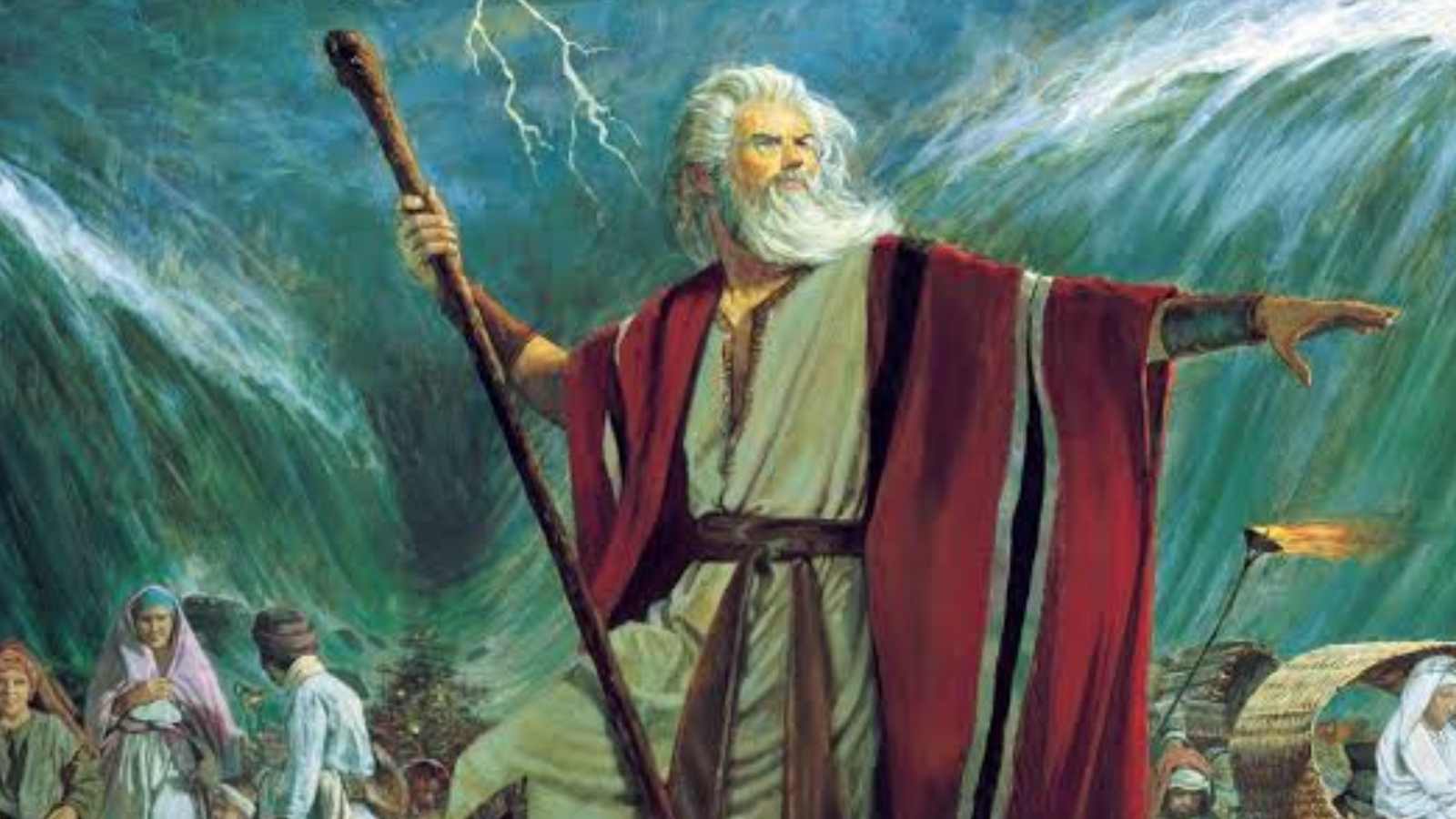

Long ago, in the land of Ancient Egypt, a great and terrible darkness had fallen upon the Hebrew people. They had grown numerous and strong, and the ruling Pharaoh, gripped by fear that they might one day rise up or ally with his enemies, condemned them to a life of brutal slavery. But his cruelty did not stop there. Terrified of their growing numbers, he issued a chilling decree: every newborn Hebrew boy must be thrown into the Nile River to drown. It was in this time of terror and despair that a child was born who would one day change the course of history.
A Levite couple named Amram and Jochebed looked upon their newborn son and saw that he was a healthy, beautiful boy. They could not bear to surrender him to the river’s cold embrace. And so, for three months, they hid him in their home, shielding him from the Pharaoh’s soldiers. But as the baby grew, his cries became louder, and hiding him became impossible. Desperate and determined, Jochebed devised a daring plan. She took a basket and wove it from papyrus reeds, sealing it tightly with tar and pitch so that no water could seep through. Gently, she laid her precious son inside, carried him to the Nile, and placed the tiny vessel among the reeds along the riverbank. Then she stepped back, her heart heavy with fear and hope.
Standing at a distance, watching over her baby brother, was Moses’ older sister, Miriam. She held her breath as the river flowed gently around the basket. And then, in a twist of fate that could only be described as divine irony, Pharaoh’s own daughter came down to the Nile to bathe. Her eyes fell upon the basket among the reeds, and she sent her servant to retrieve it. When she opened it, she found a crying baby boy, and her heart was moved with deep pity. She recognized him as one of the forbidden Hebrew children, but she defied her father’s cruel decree and decided to save him.
Seeing the princess’s compassion, Miriam bravely stepped forward from the shadows. She asked if she should find a Hebrew woman to nurse the baby, and the princess agreed. Miriam hurried home and fetched Jochebed, Moses’ own biological mother. In a masterful stroke of irony, the Egyptian royal court paid a Hebrew slave woman to nurse and raise her own son. When the child grew older, Jochebed returned him to Pharaoh’s daughter, who officially adopted him into the royal household. She named him Moses, saying, “I drew him out of the water.”
And so Moses grew up cloaked in the absolute privilege, wealth, and education of an Egyptian prince. Yet his story had begun firmly in the dust of slavery. This dual identity would ultimately drive him to abandon his royal life, confront the mighty Pharaoh, and lead his people out of bondage into freedom. The child saved from the river would become the deliverer of a nation, proving that even in the darkest of times, hope can be found in the most unexpected places.
