
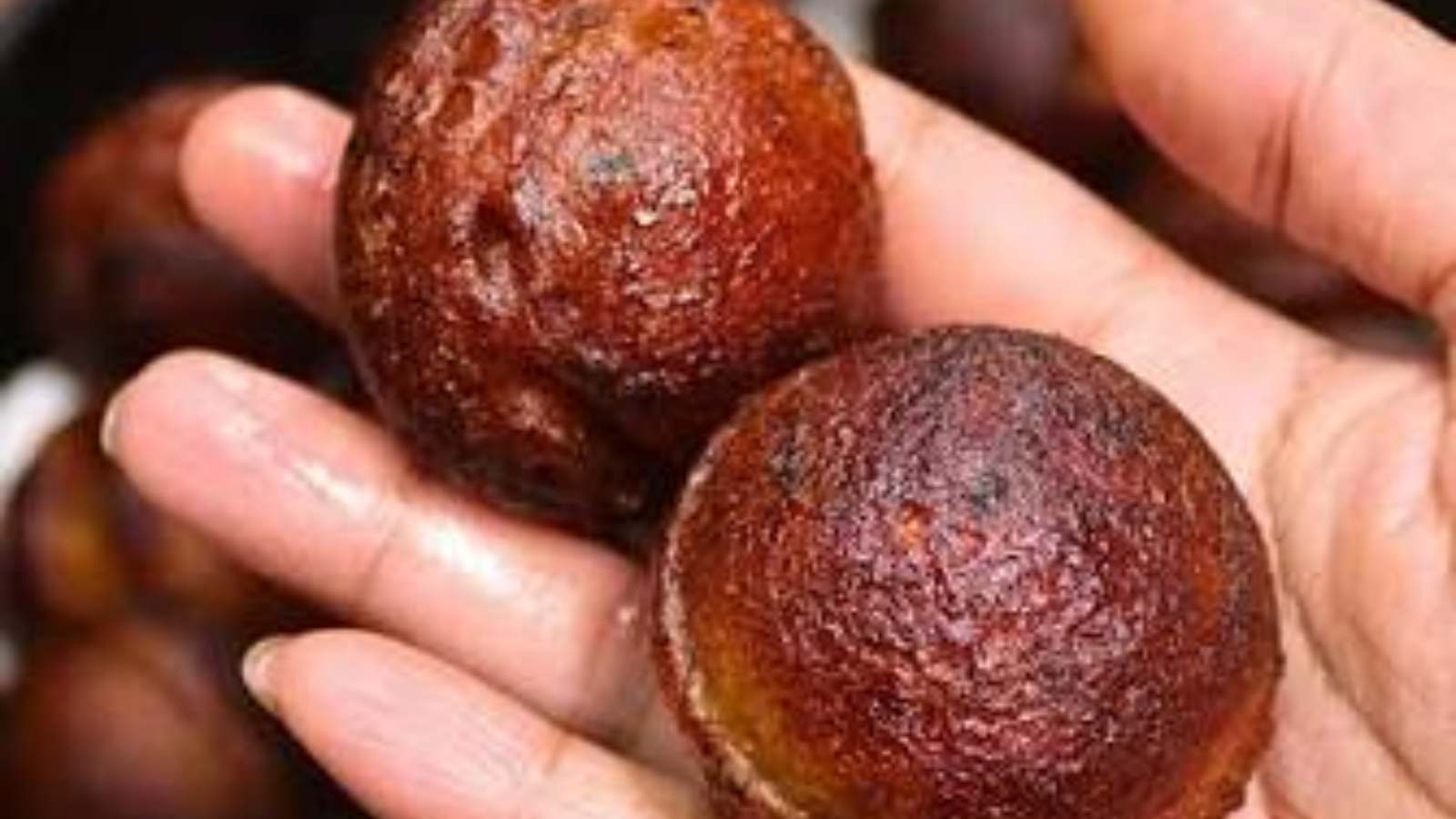

- Ingredients:
- Raw Rice: 1 cup, soaked for 4 to 5 hours
- Jaggery: 150 to 200 grams
- Small Banana: 1 large or 2 small
- Coconut Bits: 2 tablespoons
- Black Sesame Seeds: 1 teaspoon
- Cardamom Powder: ½ teaspoon
- Dry Ginger Powder: A pinch
- Ghee: 1 tablespoon for roasting
- Oil or Ghee: For deep frying
The secret to the perfect, crispy-yet-soft Unniyappam lies in balancing the rice-to-banana ratio and ensuring your batter is fermented just right. This traditional Kerala sweet is a favourite in households across the state, especially during festive occasions like Onam, Vishu, and Karthika. With the right ingredients and a few simple techniques, you can master this beloved snack and enjoy golden, aromatic unniyappams that are crispy on the outside and soft and spongy on the inside.
The batter texture and ingredients are crucial to getting the perfect unniyappam. Use raw rice or idli rice and soak it for at least four to five hours. When grinding, use as little water as possible. The batter should be thick, similar to idli batter. Use small, sweet bananas like Palayankodan or Rasthali. Avoid adding too many bananas; overdoing it will make the unniyappams absorb too much oil and break apart while frying. Melt the jaggery with a minimal amount of water and strain it to remove impurities before adding it to the ground rice. Let the syrup cool slightly before mixing to avoid cooking the rice flour prematurely. Fermentation is crucial. Always let the batter rest for at least four to six hours, or overnight in cooler climates. Fermentation gives the unniyappam its signature spongy, airy texture inside. If your batter has fermented well, you do not need baking soda. If you are in a rush and frying immediately, add just a tiny pinch. Too much soda makes them excessively oily.
Flavour enhancers and frying technique make all the difference. Fry small bits of fresh coconut and a teaspoon of black sesame seeds in ghee until golden brown, then mix them into the batter. This adds an authentic, crunchy bite. Don’t forget a pinch of freshly crushed cardamom powder and a tiny pinch of dry ginger powder to balance the sweetness. Use an Unniyappam chatti, preferably cast iron or soapstone. Fill the molds about half to three-quarters full with oil or a mix of oil and ghee. The oil must be medium-hot. If it is too hot, the outside turns dark brown while the inside stays raw. Flip them gently using a skewer or fork once the bottom turns golden.
Instructions to cook : Melt the jaggery blocks in ¼ cup of water over medium heat. Once completely dissolved, strain the syrup through a sieve to remove any impurities. Set it aside to cool down to lukewarm. Drain the soaked rice thoroughly. Add the rice to a blender along with the chopped banana. Pour in the lukewarm jaggery syrup gradually and blend into a smooth, thick batter. The consistency should be thick like idli batter. Do not add extra water. Heat one tablespoon of ghee in a small pan. Fry the coconut bits until they turn a nice golden brown. Add the sesame seeds at the end and let them crackle. Pour this ghee mixture straight into the prepared batter. Stir in the cardamom powder and dry ginger powder. Mix everything well. Cover the bowl and let the batter rest at room temperature for four to six hours. Place your appakaral on medium heat. Fill each mold about three-quarters full with oil. Once the oil is medium-hot, pour the batter into each mold using a small ladle. When the bottom edges turn golden brown and puff up, gently flip them over. Fry until both sides turn a beautiful deep brown. Drain them on paper towels and serve warm. With these tips and the right technique, you can make perfect unniyappams every time.
